

MLS.LINK NCAA Recruiting Advisory

A Complete Service System

From self-assessment to final admission, from a single consultation to full-cycle mentorship — professional, comprehensive, stable, and international.

From Self-Awareness to Admission
From a free assessment to handing over the whole path — each tier spells out who it is for, what is included, how it runs, and what it costs. Open one.
01
NCAA Recruiting Self-Assessment
Free
Start with a number — how far your child actually is from their target program. Not a feeling. Calculated.
See what you get ▾

Who it's for

Any family considering athletic recruiting, ages 10–18. You don't need to have decided on a path yet — the moment you haven't decided is exactly when this is most useful.

Where you probably are right now

Everyone around you has an opinion — "the UTR needs to be higher," "you should be emailing coaches by now" — and nobody can tell you the one thing you actually want to know: where your child stands, what's missing, and whether there's still time.

What you get

  • Recruiting profile readiness — a 0–100 score (athletic performance 40% · academics 30% · profile completeness 30%)
  • The gap to your target level — purely athletic, nothing else mixed in
  • Profile completeness checklist — photo, highlight video, best result, verified UTR, GPA, AP count, weekly training hours: exactly what's still missing

How the number is calculated

This is not a black-box AI score. The UTR benchmark starts from published recruiting data (UTR Sports / NCSA); once you add your own target schools, the system switches to the real typical UTR of the schools on your list — measured against where you actually want to go, not against the world.

And if your child is targeting D3 only, the system will not show a D1 comparison — there is no such standard to clear for D3, and showing one would be misleading. Every number here can be questioned, and we can answer.

Time required

30 seconds to register. About 15 minutes for the full profile.

02
Starter Positioning Report
$49
$49 answers one question — where you stand right now.
See what's inside ▾

Who it's for

Families beginning to pay serious attention to NCAA recruiting, child in grades 6–10. You're not ready to commit thousands, but you want something more solid than a hunch.

What you get

  • Four scores: athletic fit · academic fit · coach visibility · international-student advantage
  • Reach / Match / Safety shortlist
  • Projected readiness range 12 months out
  • The three things to do first — based on your child's actual profile, not generic advice

Turnaround

Generated instantly on payment. No queue, no waiting.

Why this tier isn't free

It isn't about the $49. When something is free, families fill the form in casually; families who have paid enter their real UTR, real grades, real match history — and that accurate profile is the ground every later judgment stands on. The truer it is, the sharper our judgment can be.

03
In-Depth Positioning Report
$200
$49 tells you where you stand. $200 tells you — how to get there.
See the difference ▾

The difference, in one line

$49 is an instant snapshot. $200 is the full diagnosis. The starter report tells you where your child stands; the in-depth report fills in the why and the next twelve months, and is released only after the team has reviewed and signed it off. Not more pages — more judgment.

Who it's for

Families who have decided to go down this road, child in grades 8–11. You no longer need to "learn more" — you need something you can act on.

What you get

Everything in the starter report, plus

  • An interpretation of the result: why it looks like this, and which single factor is the real bottleneck
  • A full school list with reasoning for each: why this one is a Match and that one is a Reach
  • A 12-month action plan: what to do, and when
  • Timing calls: when to start contacting coaches, which vacation window matters most, and what missing it costs

Turnaround

Released after team review — a report never reaches you automatically; someone has to look at it and mark it ready before it appears in your portal.

📚
52-Week Community Program
¥3,650/yr
About the price of a coffee a day, for a full year that covers everything this path demands. Capped at 15 families per group.
See all 52 weeks ▾

Who it's for

Child in grades 6–10, with parents willing to learn and judge for themselves — but done with piecing information together from a dozen half-reliable sources.

Why only 15 families per group

The cap is deliberate, not a capacity limit. Past a certain size a group becomes a broadcast — nobody's specific question gets answered, and there's no privacy left. What you ask in there is your child's real results and real difficulties. That shouldn't happen in front of a hundred strangers.

Three fixed posts a week — not whenever we get around to it

Monday NCAA news
What changed this week in policy, trends and window timing — explained once, properly.
Wednesday Case breakdown
A real family's path taken apart — the ones that worked, and the ones that didn't.
Friday Open Q&A
Whatever you've been saving up all week.

Lily is in the group herself — not an assistant posting on her behalf. A support assistant is online 10 hours a day, so a question that hits you on Tuesday doesn't have to wait until Friday.

How the 52 weeks are structured

Weeks 1–12 Foundation
The NCAA landscape · D1/D2/D3 differences · the UTR system in depth · the grade 9–12 timeline · how to contact college coaches (email logic) · highlight video standards · how coaches filter (fit vs rank) · scholarships (athletic vs academic) · where international recruits actually have an edge
Weeks 13–20 Systems & Execution
Top D3 tennis programs · the US college tennis map by conference · a college team's daily schedule · how coaches actually select · choosing summer camps · UTR improvement strategy · season planning · building the recruiting profile
Weeks 21–25 The USTA System
USTA structure and the National Pathway · ranking and point mechanics (why some players compete constantly and their UTR still won't move) · tournament tiers (L1/L2/L3/Sectional/ITF) · how to combine USTA, UTR and ITF effectively · international vs US-domestic pathways
Weeks 26–32 Trends & Core Capabilities
2026 recruiting trends · women's and men's tennis trends separately · elite program breakdowns · balancing tennis and academics · a six-month training model · competition psychology
Weeks 33–37 Decisions & Positioning
A real decision model for choosing a college · what UTR maps to which tier · the mistakes 90% of families make · opportunities and misconceptions for Chinese students · family planning (investment vs outcome)
Weeks 38–43 The Vacation Windows
Winter window (Dec–Jan): what college life is really like · how to talk to coaches · admitted-case breakdowns
Spring prep (Feb–Apr): how to choose showcases (more expensive is not better) · recommended showcases by level · camp vs showcase vs tournament
Weeks 44–52 Conversion & Outcomes
Case studies on high-UTR pathways · 2027 trends · summer training (the golden window) · the reality of college tennis · scholarship negotiation · offer strategy · assembling application materials · the final decision · year in review and Q&A

Where you'll stand a year from now

You stop asking "what should we be doing next" — because you know what the next move is, and why it's now.

¥3,650 / year · 15 families per groupAsk about joining →
04
Annual Recalibration + 60-Minute 1-on-1
$500/yr
At this tier, what you're buying is Lily's own judgment.
See what's included ▾

Who it's for

Families with a child in grades 7, 8 or 9the three years that decide the rest of it.

Nearly every family gets stuck on the same question somewhere in there: do we actually commit to the NCAA path? Are the results good enough, is there still time, and what happens if the whole family invests and it doesn't work out. The worries look alike because the situations genuinely are.

This tier exists for that question: first the data puts your child's real position on the table, then Lily herself spends 60 minutes on your family's specific doubts. The fog clears, the direction gets settled, the plan gets accurate — and you stop taking detours.

What's included

  • One full annual recalibration report — the positioning re-run against the latest UTR, GPA, match record, coursework and target-school changes, with the school list re-tiered
  • One 60-minute 1-on-1 with Lily herself — she arrives holding that report and your child's full profile

Two things. Stated plainly, with nothing padded around them.

About the 1-on-1, plainly

The 1-on-1 is not sold separately. Lily comes into those 60 minutes already holding your child's full profile — not opening with "so how old is he?"

A consultation without data can't go deep; the first 20 minutes get spent reconstructing background, which wastes everyone's time. So we don't take consultations without a profile. That's us respecting your time as much as hers.

$500 / year · one report + one 60-minute 1-on-1Start with the free assessment →
05
Annual Planning · 12-Month Program
$10,000 and up
Hand over the execution — competition, academics, coach outreach, application season, run by the team for a full year. Priced by grade.
See what's covered ▾

Who it's for

Child in grade 8 or above, committed to the NCAA path, with a family that wants someone to take over execution rather than researching the rulebook between work meetings.

Priced by grade

Grade 8 $10,000 / yr
The earliest entry point. This year builds the foundation — direction, habits, competition rhythm — while there's still room to adjust calmly.
Grade 9 $15,000 / yr
The year before the recruiting window opens in earnest. Athletics and academics both have to hold.
Grades 10–12 $20,000 / yr
The recruiting and application years. Coach outreach, offer strategy and scholarship negotiation all happen here, and the workload is heaviest.

The earlier you start, the lower the cost per year — because the earlier we're involved, the less there is to salvage later.

Signing partway through a year

The price follows the grade your child is in on the day you sign; the program then runs a full 12 months from that date — moving up a grade partway through costs nothing extra. Renewal is priced at whatever grade they're in by then.

For example: signing in November of 8th grade costs the 8th-grade rate ($10,000) and runs to the following November. Those 12 months span the back half of 8th grade and the front half of 9th — and the move up doesn't change the price.

If fewer than three months remain in the current grade when you sign, we'll suggest signing at the next grade's rate with the program starting next school year — so you're not renewing two months after you started.

Grades 10–12: no discount, but sign all three at once

There's no discount in these three years, because there's no slack in them. Coach outreach windows, the ED/RD call, negotiating once offers land — whether this works comes down to these years, and they take the most from the team.

We still recommend signing all three at once, and not to save money:

  • Coach relationships accumulate. Outreach the team starts in 10th grade is what pays off in 12th. Drop a year in the middle and the momentum disperses — the next year starts from scratch.
  • Application season is the wrong time to be making purchasing decisions. While your child is chasing results, matches and essays, the last thing a family needs is to re-evaluate every year whether to renew.
  • Three-year price lock. Families who sign grades 10–12 together hold the price from their signing day for all three years — whatever the standard rates do later, yours stays where it was.

What's covered

  • Competition planning — a full-year tournament calendar and conditioning cycle, so matches actually serve the recruiting goal
  • Academics — NCAA 16-core-course audit, course selection, testing, Eligibility Center registration handled for you
  • Athlete brand — athlete profile and professionally edited recruiting video
  • Coach outreach — the team personally pitching your child to target programs, over multiple rounds
  • Application season — targeted outreach to 10–25 programs, ED/RD window calls, offer decisions and scholarship conversations
  • Psychological support and family communication — adolescence, and the gap between what parents expect and what the child wants

How to start

By application. The team reviews your child's full situation, then talks with you one-on-one about fit and entry point.

$10,000 / $15,000 / $20,000 · by gradeApply for Annual Planning →
06
Four-Phase Full-Cycle Program
$75,000
From setting direction all the way to signing. One team, the whole way. Signing up front earns an entry offer: sign in grade 8 and that year is free with a five-year price lock; sign in grade 9 and that year is half price.
See the four phases ▾

Who it's for

Child in grades 9–12, with a family that wants one team responsible from end to end — not services bought in segments, but the whole path handed over from positioning through signing.

The four phases

Phase 1 Direction
Recruiting positioning decisions · building the competitive system
Phase 2 Development
Season planning · UTR data tracking
Phase 3 Recruiting Launch
Coach communication · building the showcase system
Phase 4 Application & Signing
Comparing offers · scholarship negotiation · executing the signing

How the list price works

Grade 9 $15,000
The year before the recruiting window opens in earnest.
Grades 10–12 $20,000 / yr
Coach outreach, offer strategy and scholarship negotiation all happen in these three years.

$75,000 for grades 9–12.

Two entry offers, for signing up front

The offer is earned by committing to the whole path at once and paying in full — not by buying it a year at a time.

Sign in grade 8 · 5 years that year free + five-year price lock
Grade 8 is free (that year alone lists at $10,000); grades 9–12 are charged at list, with no further discount. Prices are locked for five years — whatever the standard rates do later, your family stays at today's.
You pay $75,000, for 5 years.
Sign in grade 9 · 4 years grade 9 at half price
Grade 9 is charged at half price, saving $7,500.
You pay $67,500, for 4 years.

Per year: $15,000/yr signing in grade 8 (and locked) · $16,875/yr signing in grade 9. The earlier you hand over the whole path, the lower the annual cost — because the earlier we're involved, the less has to be salvaged. By grade 11, discovering a window has already closed is not something more money can fix.

When you sign changes the length, not the price

This program doesn't sell a number of years — it sells being there until graduation. It runs from the day you sign until your child finishes 12th grade: the later you sign, the less time we have to help, and the price is the same.

Said plainly: a family arriving in November has three months less than one that arrived in August, and the outcome we're asked to deliver is identical. Coming early buys more than a discount.

What the offer depends on

The free or half-price entry year depends on completing the full program. If a family leaves partway through, that entry year is rebilled at list price.

This isn't a penalty — it's the reason the offer exists. We put the cheapest year first because we expect to walk the rest of it with you; the foundation year isn't a product that stands on its own.

How to start

By application, limited places. Final figures and payment terms are confirmed in conversation.

$75,000 list · grade 8 signing: one year free + locked · grade 9 signing: half yearApply →
📖
The NCAA Athletics Reference Book (In Progress)
Over a decade of frontline methodology, distilled into a standard reference for NCAA athletic recruiting — helping more families build the right mental framework.
15+
Years of Experience
500+
Families Guided
50+
US & China Coaching Network
UK·US·CA·AU·CN·HK
Partner Network
Four Core Capabilities Behind This System
Every tier of service is powered by these four capabilities working together.
🏆
Competitive & Tournament Planning
A full-year tournament calendar and conditioning cycle management, so training and matches actually serve recruiting goals.
Read more ▾
We help structure training and competition around recruiting goals, rather than playing "whatever's available" — tournament choices are made to raise UTR and coach visibility.
🎓
Academic Strategy
Precise academic positioning, with full tracking of NCAA's 16 core courses.
Read more ▾
Precise academic positioning tailored to each school system (US boarding schools, bilingual schools in China, IB/A-Level); ongoing tracking and auditing of NCAA's 16 core courses, and Eligibility Center registration support.
📧
Athlete Branding & Coach Outreach
A polished Athlete Profile, with our team personally reaching out to coaches.
Read more ▾
We build an Athlete Profile tailored to how NCAA coaches actually evaluate recruits, produce a professional highlight video, and personally lead multiple rounds of targeted outreach to your target schools' coaches.
🧠
Mental Resilience & Family Support
Building competitive mental toughness and steadying the household through recruiting season.
Read more ▾
Dedicated support for on-court mental toughness (choking on big points, injury anxiety); regular 1-on-1 conversations to ease the double pressure of academics and athletics on the whole family.
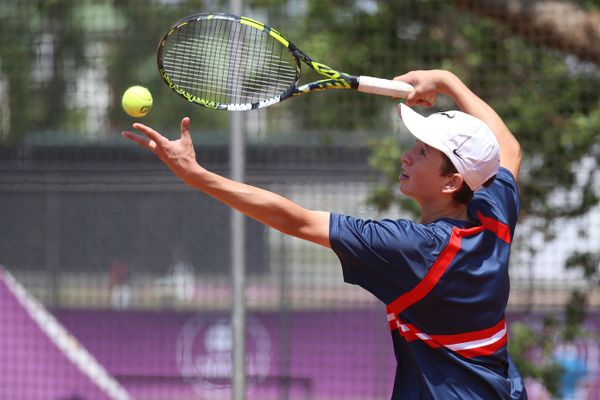
Serve in match play
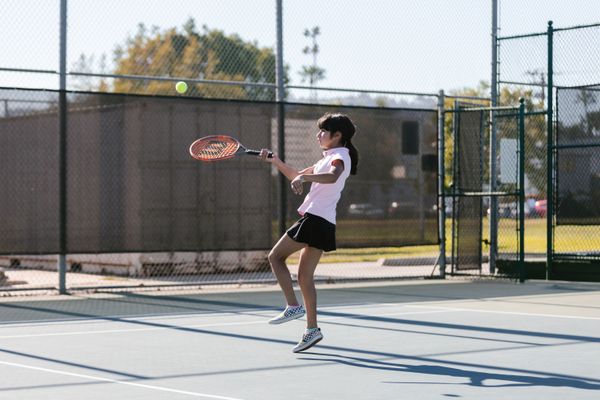
Forehand on court
Young players together
Medals earned
Why Tennis Recruiting Needs a "Chief Architect"
The coach, the academic advisor, the essay coach, the school counselor, the parents — each one is a genuine virtuoso, but each only sees their own part. Like an orchestra — every musician a master of their instrument, but what makes the performance whole is the conductor standing at the center. That is exactly what a Chief Architect does: bring all six forces into one unified direction.
🎾
Tennis Coach
🎓
Academic Advisor
✍️
Essay Coach
🏫
School Counselor
❤️
Parents
🎯
The Student
↓ ↓ ↓ ↓ ↓ ↓
MLS.LINKChief Architect · One Unified Score
One Clear, Coordinated Path
🎾
Tennis Coach
Focused on drills and matches — can't manage academic risk or NCAA compliance.
Read more ▾
A coach can build great technique and tactics, but can't manage the academic risk across different high school systems, or the complexity of NCAA's 16 core courses — that's simply not their area.
📚
Academic Tutors
Focused on test scores — can't coordinate with a packed tournament calendar.
Read more ▾
Test-prep tutors are great at raising scores, but their scheduling rarely accounts for a student's frequent cross-state, cross-border tournament calendar — training and exams end up fighting each other.
✍️
Essay Coaches
Great writers — but lack real experience with coach outreach.
Read more ▾
Essay coaches can write a beautiful story, but lack real experience directly negotiating with college coaches during the NCAA contact period — that takes someone who genuinely understands recruiting rules.

Curious where your child stands today?

Log in, fill out a profile, and get an initial assessment within 48 hours.

Client Login About Us
💬